

This week is Trustees’ Week, which seems like a good opportunity to talk about the role trustees play in charities and, hopefully, encourage a few more people to consider becoming one.
When people think about charity trustees, they probably imagine board meetings, financial reports and lots of paperwork. There is certainly some of that involved, but there’s much more to the role.
Every registered charity has a board of trustees responsible for overseeing its work, setting its strategic direction and making sure it is being run properly. Trustees also need to understand the risks facing their charity and consider how these can be managed.
It’s a voluntary role, and the time commitment varies between organisations. At Deaf Action, our trustees meet four times a year, with occasional additional meetings when there’s a particular issue we need to discuss.
What makes a good board?
For a charity to do well, it needs a board with a good mix of skills, knowledge and experience.
At Deaf Action, our trustees bring experience from a wide range of backgrounds, including charity leadership, business management, education, finance, communications and community development. Each brings different knowledge and skills that help us make informed decisions and guide the work of the charity.
But professional experience is only part of it.
It’s equally important that our trustees reflect the communities Deaf Action exists to support. That means having people with different experiences of deafness and hearing loss, whether they are BSL users, have experienced sudden or progressive hearing loss, have deaf family members or work professionally with deaf people.
Having that mix matters. People approach problems differently depending on their own experiences, and good decisions come from being able to consider a range of views rather than everyone agreeing with each other.
You don’t need to have been a trustee before, either. There are plenty of people who have valuable skills and experience but perhaps haven’t thought about putting them to use in this way.
It’s not always an easy job
Like many organisations, charities have faced increasing financial pressures in recent years. Rising costs, uncertainty around funding and the need to plan for the unexpected all present challenges.
For trustees, this means thinking carefully about how a charity uses its resources, ensuring it can continue delivering its services while remaining financially sustainable in the long term.
And unexpected costs do happen. A roof starts leaking, a lift breaks down or a building needs repairs. Charities need to be able to deal with these things while continuing to deliver their services.
This can involve making some difficult decisions. Trustees have to consider not only what a charity wants to do, but what it can realistically afford to do, both now and in the years ahead.
Beyond the financial responsibilities, trustees also need to understand the importance of the services a charity provides and the people who depend on them.
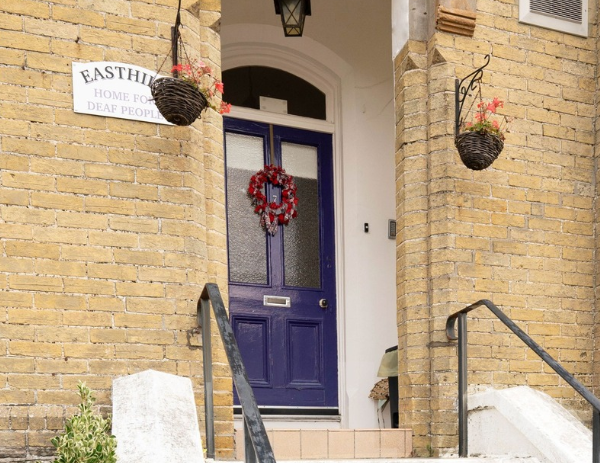
At Deaf Action, one example of this is Easthill, our care home on the Isle of Wight.
Easthill is the only BSL-led care home in the UK and has been rated Good by the Care Quality Commission. It provides a vital service for deaf people who need residential care, in an environment where they can communicate in BSL.
If Easthill wasn’t there, what would happen to the people who rely on it? There is no equivalent provision elsewhere in the UK. Residents could find themselves in mainstream care homes where staff may not be able to communicate with them in their own language.
That’s a very real concern, and one of the reasons the service matters so much.
For our trustees, understanding the importance of services like Easthill is central to their role. It’s about recognising the difference our work makes to people’s lives, while also ensuring we have the resources, planning and financial stability to continue delivering that work for years to come.
This is what makes trusteeship such an important responsibility. The decisions made around a boardroom table aren’t just about budgets and policies. They can have a very real impact on the people a charity exists to support.
Why give it a try?
I’ve talked quite a bit about the responsibilities and challenges, but I wouldn’t want that to put anyone off.
Being a trustee can be enormously rewarding. You get to contribute to a cause you care about, work with people who bring different skills and experiences, and learn a great deal along the way.
It’s also an opportunity to see how a charity operates and to be involved in decisions that can make a real difference to its work.
Not everyone will have a background in finance, management or governance, and that’s fine. Charities need all sorts of people on their boards. What matters is having something to contribute, being willing to learn and having a genuine interest in the organisation’s work.
I’d encourage anyone who has thought about becoming a trustee to look into it. And even if you’ve never considered it before, perhaps Trustees’ Week is a good time to start.
Could you join Deaf Action’s board?
Deaf Action currently has six trustees, and I’m grateful for the time and commitment they give to the organisation. You can find out more about them on our website.
We’re also looking for new trustees, particularly someone who could take on the role of Treasurer.
If you have an interest in Deaf Action’s work and think you might have something to offer, please do consider getting in touch. We’d be happy to provide more information about what’s involved.
And if Deaf Action isn’t the right charity for you, there are plenty of others looking for people to join their boards.
Charities depend on people being willing to give their time, and trustees are an important part of that. It’s a role worth considering, and one I’d encourage more people to try.
If you’d like to find out more about becoming a trustee, there are some useful resources available on the Trustees’ Week website.
Philip Gerrard MBE
Chief Executive Officer, Deaf Action
- Interested in joining Deaf Action’s board? Get in touch at admin@deafaction.org
- Trustees’ Week has information about the role and how to get involved.
- You can take this short quiz to see how much you know about trusteeship.
- There’s also information about finding trustee opportunities.
Discover other CEO blog posts here.